Who Owns the Most Bitcoin in 2025? Inside the Rich List

With Bitcoin reaching a new all-time high on Sunday, breaking through the $119,000 threshold, the question of who actually holds all that digital gold has never mattered more. From shadowy early adopters to trillion-dollar asset managers and sovereign governments, ownership of Bitcoin in 2025 is both more transparent and more mysterious than ever. Tracked addresses reveal a concentration of wealth—and power—across exchanges, ETFs, and a handful of long-dormant wallets that haven’t moved a coin in over a decade.
In Brief
- Over 3.4 million BTC—worth $407B—are held by 171 tracked entities, from governments to ETFs and private whales.
- BlackRock, the U.S. government, and MicroStrategy rank among the largest known holders, each controlling hundreds of thousands of coins.
- Satoshi Nakamoto remains the top holder, with an estimated 1.1 million BTC untouched since the early mining era.
While Bitcoin’s total supply is fixed at 21 million, the way it’s distributed is anything but simple. As of mid-July 2025, more than 3.4 million BTC—worth over $407 billion—sat in just 171 known wallets and institutional holdings. Federal lockups, corporate treasuries, early adopters, and hacked wallets—today’s biggest Bitcoin holders don’t just move markets, they shape global power plays.
Top Bitcoin Holders in 2025
Bitcoin’s biggest holder remains its creator: the pseudonymous Satoshi Nakamoto, who mined more than 1.1 million BTC in the network’s earliest days. That stash, untouched for over 15 years, now represents roughly 5.2% of all Bitcoin—valued at over $130 billion.
Other notable figures include the Winklevoss twins, who bought 70,000 BTC in 2013, and venture capitalist Tim Draper, who famously snapped up nearly 30,000 BTC in a 2014 government auction. Then there are the ghosts: anonymous wallets with tens of thousands of coins, like one tied to the Mt. Gox hack and another linked to the Silk Road—frozen in place since the early 2010s.
On the corporate side, MicroStrategy leads the pack by a wide margin. As of July, the company held 597,000 BTC—nearly 3% of total supply—and showed no signs of slowing its buying spree. Block.one, the firm behind EOS, still retained 164,000 BTC, while Japan’s Metaplanet and even private tech companies like Figma made headlines for their recent acquisitions.

How Governments, ETFs, and Exchanges Stack Up
The U.S. government now holds between 207,000 and 300,000 BTC, most of it seized from cybercriminals. These coins, mostly idle, were recently rebranded under a new “Strategic Bitcoin Reserve,” signaling Washington’s changing stance on digital assets. China follows close behind with around 194,000 BTC, largely frozen since the PlusToken crackdown.
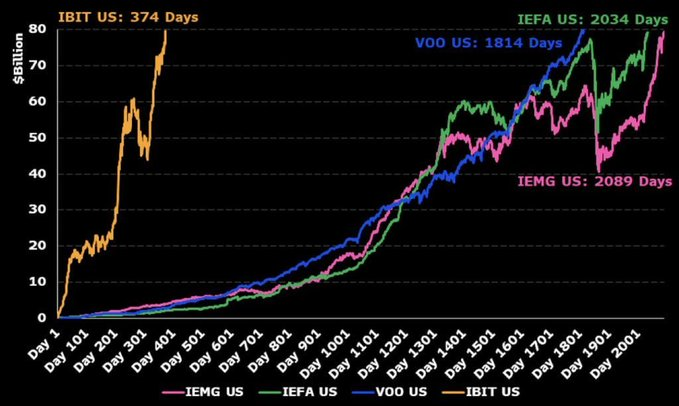
Institutional ETFs have turned into mega-holders almost overnight. BlackRock’s iShares Bitcoin Trust leads with over 706,000 BTC—worth nearly $84 billion—thanks to record-setting inflows in 2025. Fidelity and Grayscale follow suit, while Cathie Wood’s ARK and others steadily add to their stacks.
Exchanges like Binance and Robinhood remain among the biggest custodians. Binance alone controls over 248,000 BTC in cold storage, but it’s important to remember these coins belong to users, not the platform itself. Bitfinex and OKX round out the leaderboard, though total exchange reserves have dipped as investors increasingly move coins to ETFs or self-custody.
What Comes Next: More Centralization, or a Power Shift?
Ownership of Bitcoin has never been more traceable—or more complicated. With ETFs absorbing billions in inflows and nation-states quietly amassing reserves, power in the Bitcoin economy may be consolidating into fewer hands. At the same time, new technologies and regulations could usher in a broader dispersion of assets across retail and institutional holders alike.